Middle East live: US military says Iran launched seven ballistic missiles at Kuwait, Bahrain
"Tensions escalate as US intercepts Iranian missiles, Iran claims to have hit enemy bases."
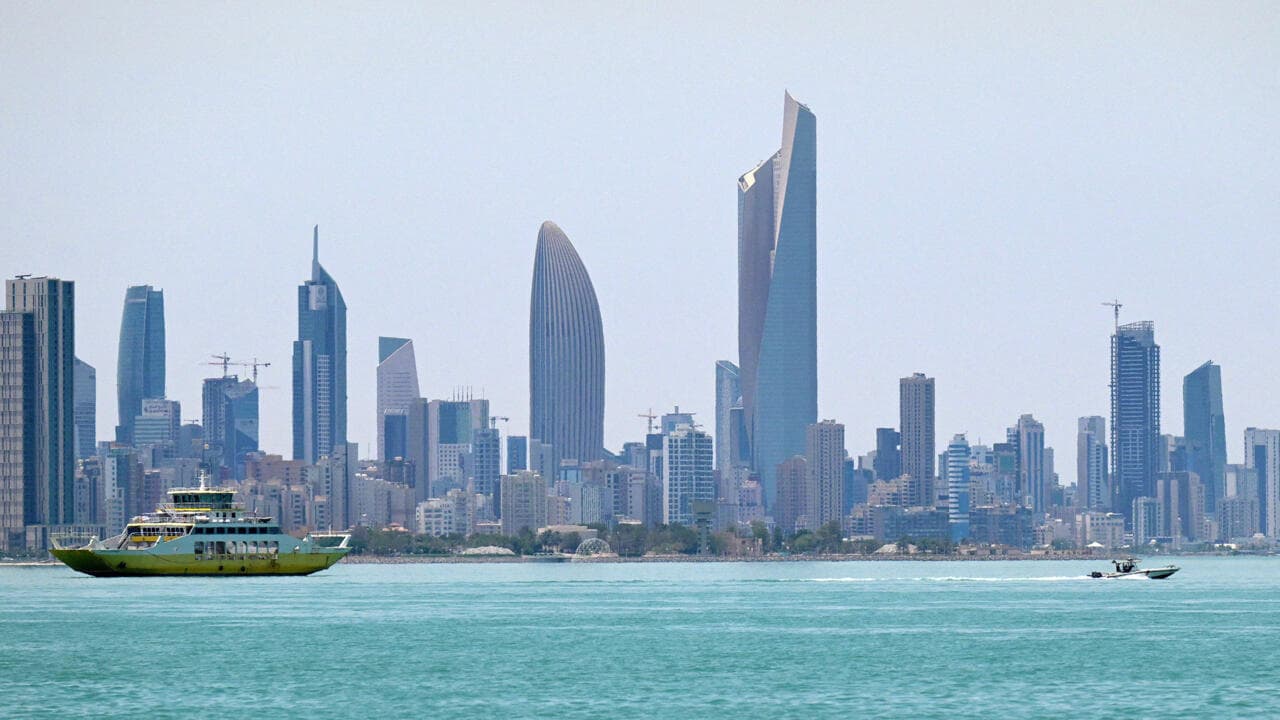
Iran launched seven ballistic missiles toward Kuwait and Bahrain on Saturday. US forces intercepted six of the missiles, with a seventh failing to reach its target. The incident occurred hours after US Central Command shot down four Iranian one-way attack drones launched toward the Strait of Hormuz.
According to US military officials, the missiles were launched from Iranian territory, with the intended targets being US military bases in the region. The US has a significant military presence in both Kuwait and Bahrain, with the latter hosting the US Navy's Fifth Fleet. The missile launch is seen as a significant escalation of tensions between the US and Iran, which have been heightened in recent months.
Iran's Revolutionary Guards claimed that they had hit "enemy bases" in the Gulf, stating that the attack was in response to the US invasion of Iranian territory. The Guards said that the attack was carried out using aerial missiles, and that it was a successful operation. However, US officials disputed this claim, stating that the missiles were intercepted and did not cause any damage.
The incident has significant implications for the region, with the potential to escalate into a wider conflict. The US has been increasing its military presence in the region in recent months, with the deployment of additional troops and equipment to Saudi Arabia and the UAE. Iran, on the other hand, has been seeking to increase its influence in the region, through its support of proxy forces in countries such as Iraq and Yemen.
The US approval of a $1.98 billion arms sale to Kuwait is also seen as a significant development, with the potential to further escalate tensions in the region. The sale includes the purchase of counter-drone technology, which is seen as a key component in the US efforts to counter Iranian drone attacks. The sale is also seen as a significant boost to Kuwait's military capabilities, which have been strengthened in recent years through the purchase of advanced weaponry.
The conflict between the US and Iran has been ongoing for several years, with the two countries engaging in a series of proxy wars and skirmishes in the region. The conflict has been fueled by a range of factors, including disputes over oil exports, terrorism, and nuclear proliferation. The US has imposed significant sanctions on Iran, which have had a major impact on the country's economy.
The international community has been calling for calm and restraint in the region, with the UN Secretary-General urging all parties to avoid any actions that could escalate the situation. The EU has also issued a statement, calling for a de-escalation of tensions and a return to diplomatic efforts to resolve the conflict.
In recent months, there have been several incidents of Iranian drone attacks on US and Saudi targets, which have been seen as a significant escalation of tensions. The US has responded to these attacks with military force, carrying out airstrikes on Iranian targets in Iraq and Syria. The conflict has also had a significant impact on the global economy, with oil prices rising significantly in response to the tensions.
The US and Iran have a long and complex history, with the two countries having been enemies for several decades. The US supported the Shah of Iran during the Cold War, and the two countries had close diplomatic and economic ties. However, the 1979 Iranian Revolution led to a significant deterioration in relations, with the US imposing sanctions on Iran and supporting Iraqi dictator Saddam Hussein during the Iran-Iraq War.
In recent years, there have been several attempts to improve relations between the US and Iran, including the negotiation of the Joint Comprehensive Plan of Action (JCPOA) in 2015. The JCPOA, also known as the Iran nuclear deal, imposed significant restrictions on Iran's nuclear program in exchange for the lifting of sanctions. However, the US withdrew from the deal in 2018, and has since reimposed significant sanctions on Iran.
The current tensions between the US and Iran are seen as a significant challenge to regional stability, with the potential to escalate into a wider conflict. The international community is urging calm and restraint, and calling for a return to diplomatic efforts to resolve the conflict. However, the situation remains highly volatile, with the potential for further escalation in the coming days and weeks.