Lebanon health ministry says Israeli strikes in south and east kill eight
"Ceasefire hopes dashed as violence erupts."
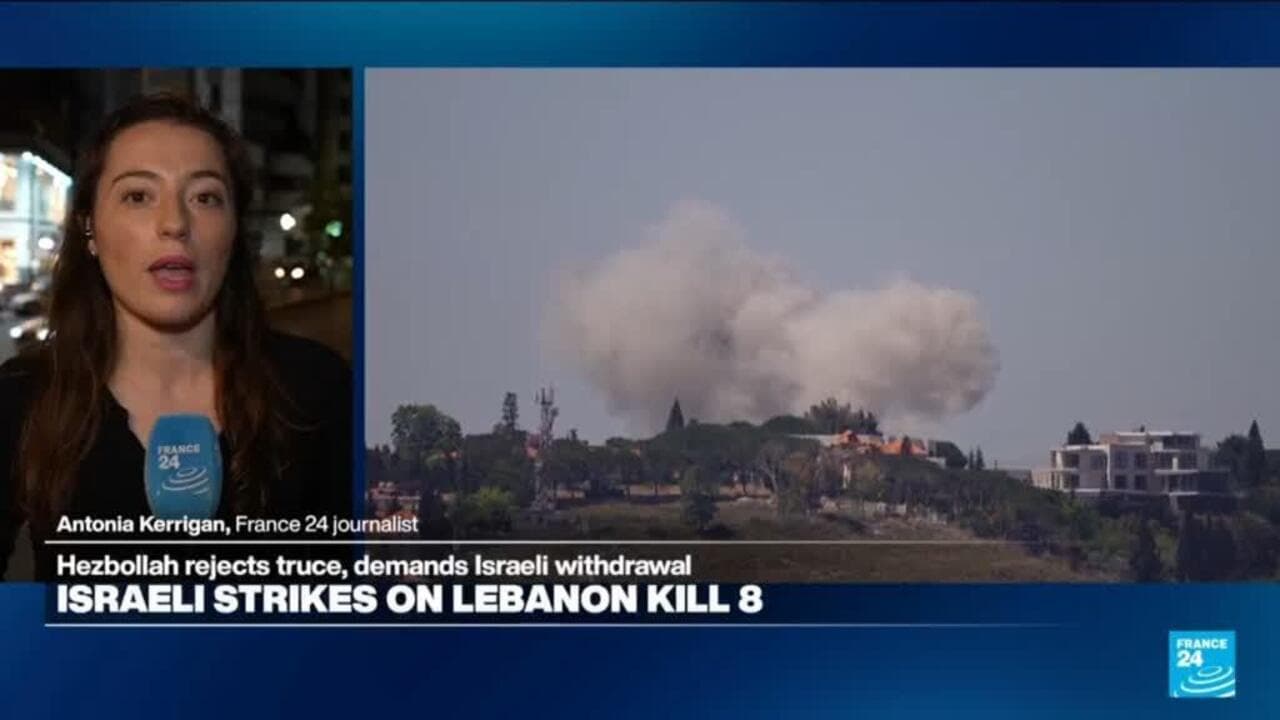
Israel launched strikes in eastern and southern Lebanon, killing eight. The attacks occurred near the city of Tyre and in eastern Lebanon, with the Lebanese health ministry confirming the casualties. The strikes, which also left eight wounded, including three children and two women, came a day after Lebanon and Israel agreed on a ceasefire plan for the conflict with Hezbollah. However, the militant group has rejected the ceasefire, leaving the region on edge.
The Lebanese health ministry reported that five people were killed in the eastern Lebanon strike, while three more died near Tyre. The ministry also stated that eight people were wounded in the attacks, with the injured including three children and two women. The strikes have raised concerns about the fragile ceasefire and the potential for further violence in the region.
The conflict between Israel and Hezbollah has been ongoing, with both sides exchanging blows in recent weeks. The Lebanese government has been working to broker a ceasefire, but the rejection by Hezbollah has complicated efforts to bring an end to the violence. The international community has been calling for a peaceful resolution to the conflict, but the latest strikes have dashed hopes for a quick end to the fighting.
The Israeli strikes in Lebanon have been widely condemned, with many governments and organizations calling for restraint. The United Nations has urged all parties to respect the ceasefire and work towards a peaceful resolution. However, the rejection of the ceasefire by Hezbollah has made it difficult to achieve a lasting peace in the region.
The implications of the latest strikes are far-reaching, with the potential to destabilize the entire region. The conflict between Israel and Hezbollah has already had a significant impact on Lebanon, with many civilians caught in the crossfire. The strikes have also raised concerns about the role of other countries in the region, with some governments accused of backing one side or the other.
In recent years, the conflict between Israel and Hezbollah has escalated, with both sides engaging in a series of tit-for-tat attacks. The violence has had a devastating impact on civilians, with many forced to flee their homes or live in constant fear of attack. The international community has been working to broker a peace agreement, but the complexity of the conflict has made it difficult to achieve a lasting resolution.
The latest strikes have also raised questions about the effectiveness of the ceasefire agreement. The deal, which was brokered by the Lebanese government, was intended to bring an end to the violence and pave the way for a lasting peace. However, the rejection of the ceasefire by Hezbollah has thrown the agreement into doubt, leaving many to wonder if a peaceful resolution is possible.
As the situation in Lebanon continues to deteriorate, the international community is calling for calm and restraint. The United Nations has urged all parties to respect the ceasefire and work towards a peaceful resolution. However, the latest strikes have made it clear that achieving a lasting peace will be a difficult and complex process.
The region remains on high alert, with many governments and organizations working to prevent further violence. The conflict between Israel and Hezbollah has the potential to destabilize the entire region, and the international community is working to prevent a wider conflict. As the situation continues to unfold, one thing is clear: a peaceful resolution to the conflict is essential to preventing further bloodshed and instability in the region.
In the midst of the violence, civilians are bearing the brunt of the conflict. Many have been forced to flee their homes, while others are living in constant fear of attack. The humanitarian situation is dire, with many organizations working to provide aid to those affected by the conflict. The international community is calling for all parties to respect the rights of civilians and work towards a peaceful resolution.
As the conflict continues, the international community is working to find a solution. The United Nations has been at the forefront of efforts to broker a peace agreement, with many governments and organizations working to support the process. However, the complexity of the conflict has made it difficult to achieve a lasting resolution, and the latest strikes have made it clear that the road to peace will be long and difficult.
The situation in Lebanon is a reminder of the devastating impact of conflict on civilians. The violence has had a profound effect on the country, with many communities torn apart by the fighting. The international community is working to support those affected by the conflict, but the need for a lasting peace is clear. As the situation continues to unfold, one thing is certain: a peaceful resolution to the conflict is essential to preventing further bloodshed and instability in the region.