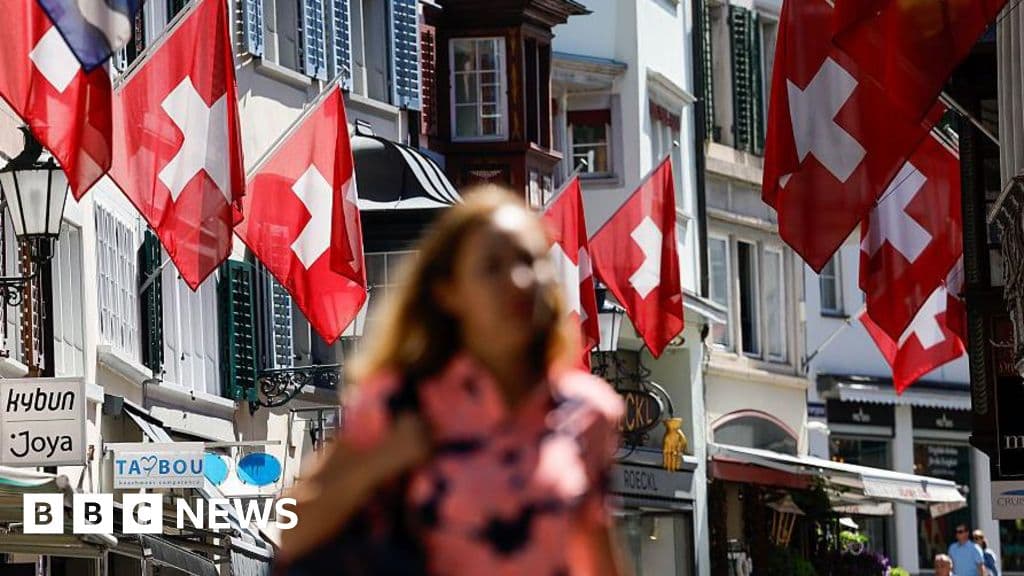
Switzerland to vote on plan to cap population at 10 million
"Voters decide on a contentious proposal to limit population growth, sparking debates on immigration and sustainability."
Switzerland votes on a population cap Sunday. The proposal, backed by the right-wing Swiss People's Party, aims to cap the population at 10 million, citing concerns over housing, public services, and the environment. This move has exposed deep divisions within the country, with opponents arguing it will damage relations with the European Union and deprive essential services of much-needed staff.
The Swiss People's Party describes the initiative as a "sustainability initiative" aimed at easing pressure on the country's resources. However, the government, other political parties, business leaders, and trade unions have dubbed it a "chaos initiative," warning of the potential consequences of such a move. With Switzerland's population having grown rapidly since 2002, from 7.3 million to 9.1 million, many voters are concerned about the strain on public services and the environment.
The proposal has sparked intense debates, with some arguing that it is necessary to preserve Switzerland's identity and quality of life. Nils Fiechter, a 29-year-old local politician from the Swiss People's Party, believes that unchecked immigration is leading to Switzerland losing its unique character. "We have lost control," he complains. "Unchecked immigration is leading to Switzerland no longer being Switzerland." He cites issues such as housing shortages, gridlocked traffic, and overburdened schools as evidence of the need for stricter controls on immigration.
On the other hand, opponents of the proposal argue that it is misguided and will not address the underlying issues. Helin Genis, a 31-year-old Social Democrat, dismisses the arguments put forward by Fiechter and his party. "It is not migrants who determine rent levels," she says. "It is not migrants who raise health insurance premiums. Nor is it migrants who make political decisions on housing, infrastructure or social investment." Genis believes that viewing problems through the lens of migration does not lead to solutions, but rather to division.
One of the key questions surrounding the proposal is how exactly a population cap would work. The Swiss proposal states that the population must not exceed 10 million before 2050 and orders the government to take measures once the figure of 9.5 million is reached. This could include limiting the number of people granted asylum in Switzerland and ending family reunification rights for foreign workers. If the 10 million cap were to be reached, international agreements, including the EU's free movement of people, would have to be terminated.
The potential consequences of such a move have caused alarm among business leaders and economists. Rudolf Minsch, the chief economist at Economiesuisse, warns that if the motion is passed, Switzerland could face challenges in its relations with the European Union. "The EU is still by far the most important trading partner for Switzerland," he explains. This is because Brussels has long warned non-EU members that they cannot simply cherry-pick the advantages of the EU's single market and wriggle out of commitments like free movement of people.
The latest opinion polls suggest that the vote will be extremely close, with 52% of voters opposed to the proposal and 45% in favor. However, a significant number of voters remain undecided, and it is unclear how they will cast their ballots. The outcome of the vote will have significant implications for Switzerland's future, both in terms of its relations with the EU and its approach to immigration and population growth.
In the run-up to the vote, both sides have been actively campaigning, with the Swiss People's Party arguing that the proposal is necessary to preserve Switzerland's identity and quality of life. Opponents, on the other hand, have warned of the potential consequences of such a move, including damage to relations with the EU and the potential for a brain drain. As the country prepares to go to the polls, one thing is clear: the outcome of the vote will have far-reaching implications for Switzerland's future.
The Swiss system of direct democracy, which allows voters to decide on major issues via the ballot box, has been hailed as a model of democratic participation. However, it also means that the country is often forced to grapple with complex and contentious issues. The population cap proposal is just the latest example of this, and its outcome will be closely watched by politicians, economists, and citizens across Europe.
As the vote approaches, voters are being asked to consider the potential consequences of their decision. Will they choose to cap the population at 10 million, potentially damaging relations with the EU and limiting the country's economic growth? Or will they reject the proposal, allowing the country to continue on its current path of managed immigration and population growth? Whatever the outcome, one thing is clear: the decision will have significant implications for Switzerland's future, and will be closely watched by the rest of the world.